What Is iThenticate? How It Differs From Turnitin (and Why You Can't Use It as a Student)
Same parent company, same underlying database, completely different customer. Here's what iThenticate actually is, who it's built for, and why it's not a practical substitute for the Turnitin your class actually uses.
The quick answer
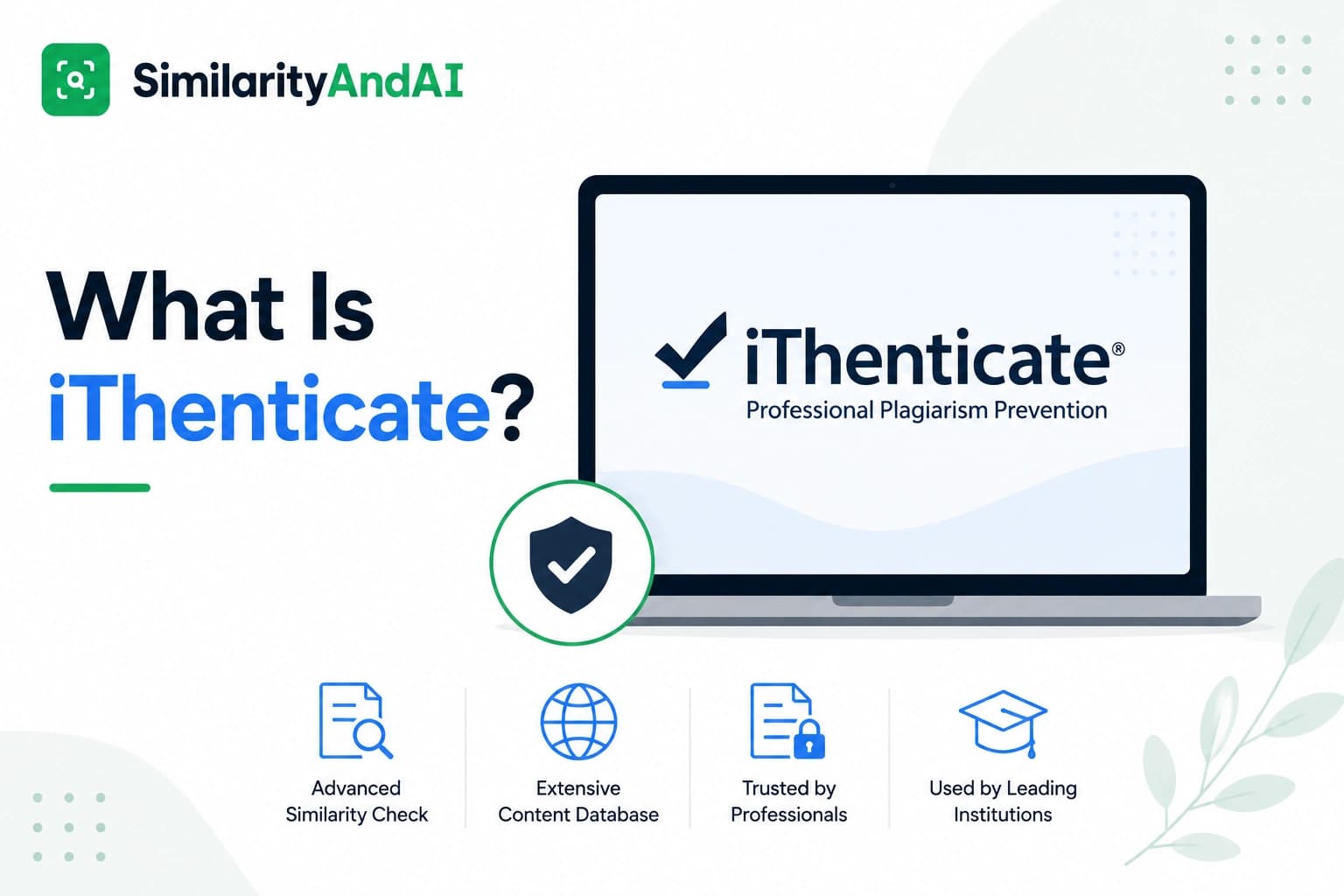
iThenticate is a similarity-checking product built by the same company behind Turnitin, sharing core underlying technology — but it's designed for a completely different customer: researchers, journal editors, and publishers preparing or vetting manuscripts for publication, not instructors checking student coursework. Per Turnitin's own help center, the two products check against meaningfully different databases and serve different workflows, which is exactly why iThenticate isn't a practical stand-in for the Turnitin check your class actually runs, even though the two are closely related.
Who actually uses iThenticate
iThenticate is aimed squarely at academic and professional publishing: researchers preparing a manuscript before submission, journal editors screening incoming papers, PhD supervisors reviewing dissertations, and graduate students finalizing a thesis for publication. It isn't built around a classroom assignment workflow at all — there's no instructor gradebook, no cohort of students submitting to a shared assignment, no due-date structure. It's organized more like a personal document workspace: individual accounts, folders, and checks run on demand against a publication-oriented database.
Same underlying technology, different databases
Both products run on shared core similarity-matching technology from the same company, which is part of why the comparison is confusing — they really are close relatives, not unrelated competitors. Where they diverge is the content each one is licensed to check against. Turnitin's comparison pool centers on a large, cross-institutional repository of previously submitted student papers, alongside web content and licensed academic publications. iThenticate's comparison pool leans more heavily toward published literature specifically — journal articles, books, conference proceedings, and other formally published material — reflecting its orientation toward pre-publication manuscript screening rather than classroom submissions.
The repository difference — and why it matters
This is one of the more practically important distinctions, and it connects directly to a subject covered in our piece on Turnitin's no-repository setting. Individual iThenticate accounts are generally structured so submitted documents are not added to any shared repository — your manuscript stays private and isn't used as a comparison source for anyone else's future check. Turnitin's default institutional setup works differently: a paper submitted to the standard repository is retained and becomes available for comparison against later submissions, unless the specific assignment is configured otherwise.
For a researcher checking a manuscript before submitting it to a journal, not wanting that manuscript later compared against other people's work makes sense — the document isn't published yet, and privacy matters. For a student, the corresponding concern is usually the opposite direction: knowing whether their own institution's Turnitin setup stores what gets submitted, which is a setting the student typically doesn't control.
iThenticate and journal publishing: CrossCheck
iThenticate has a specific, well-established role in academic publishing: many journals indexed in major citation databases use iThenticate — often under the branding Crossref Similarity Check, historically known as CrossCheck — to screen incoming manuscripts for originality before peer review or publication. This is a genuinely different use case from anything a student encounters in coursework: it's a publisher-side gatekeeping step applied to research intended for formal publication, not an assignment-checking tool.
Pricing and access
Unlike Turnitin's institution-only licensing model, iThenticate does sell individual accounts directly — but the pricing reflects its research-and-publishing audience, not a student budget. Document-credit pricing for individual researchers commonly runs into the hundreds of dollars for a small batch of checks, with a single manuscript check frequently priced well over $100 depending on the plan. That's a reasonable cost structure for a researcher checking a handful of manuscripts before submission to a journal; it's not a practical way to check routine coursework, which is exactly the gap that pushed students toward Turnitin-adjacent checking services in the first place, a point covered in more detail in our comparison of Turnitin and free plagiarism checkers.
Why students can't just use it instead
Even setting price aside, iThenticate wouldn't actually reproduce what your instructor sees. Its database is oriented toward published literature rather than the student-paper comparison layer Turnitin's institutional accounts check against, so a clean iThenticate result doesn't tell you what a Turnitin check run through your actual class would find. The two products are built for genuinely different questions — "is this manuscript original enough to publish" versus "does this assignment overlap with other student work and existing sources" — and a result from one doesn't reliably predict the other.
The bottom line
iThenticate and Turnitin come from the same company and share underlying technology, but they're built for different people solving different problems — publication screening for researchers and journals versus coursework checking for students and instructors. Buying an individual iThenticate account isn't a practical substitute for the Turnitin check your school actually runs, both because of cost and because the two check against meaningfully different material.
If you want to see your actual similarity and AI detection results before you submit coursework, you can check your reports through SimilarityAndAI — the same Turnitin engine your institution uses, priced per report rather than per manuscript.
Frequently asked questions
Is iThenticate the same company as Turnitin?
Yes — iThenticate and Turnitin are sibling products from the same company, sharing core underlying similarity-checking technology. The difference is who each product is sold to and what database each one checks against, not the company behind them.
Can a student buy an iThenticate account instead of using Turnitin?
Technically, individual iThenticate accounts exist and can be purchased directly — but they're priced and structured for researchers submitting manuscripts for publication, not for routine coursework. A single check can run well over $100, and iThenticate's database is oriented toward published academic literature rather than the mix of student-paper comparisons Turnitin performs, so it wouldn't actually reproduce the check your instructor runs.
Does iThenticate check against other students' papers like Turnitin does?
No, not in the same way. Turnitin's institutional accounts compare submissions against a large repository of previously submitted student papers across institutions. iThenticate is oriented toward published literature — journal articles, books, conference proceedings — reflecting its use case for researchers and publishers rather than classroom instructors.
Does submitting to iThenticate store your document the way Turnitin does?
Individual iThenticate accounts are generally structured so documents are not saved to a shared repository, keeping submitted work private rather than making it available for comparison against future users' documents. This is a meaningful difference from Turnitin's default institutional setup, where a paper submitted to the standard repository is retained and can be compared against later — covered in more depth in our piece on Turnitin's no-repository setting.
Ready to check your paper?
Get your Turnitin reports in minutes.
Same reports your institution generates — delivered privately, fast.
Related articles