Can Your Turnitin Score Change After You Submit?
Your paper doesn't change, but the database it's compared against does. Here's why a similarity score can look different weeks later, who's able to refresh a report, and what that means if you're staring at an old result.
The quick answer
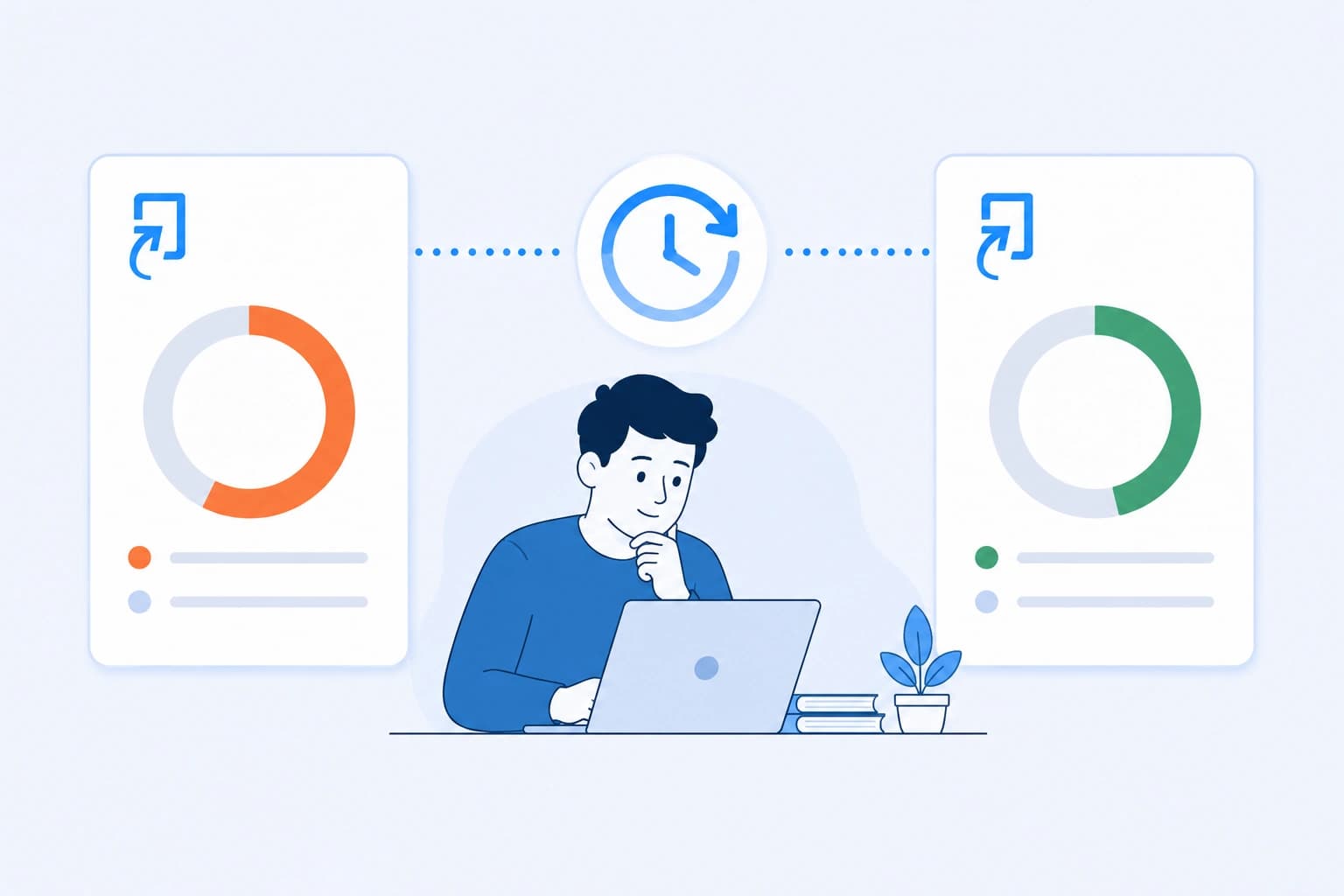
Yes — not because your paper changes, but because what it's being compared against does. Turnitin's databases are continuously growing: new web pages, new academic publications, and new student submissions are added on an ongoing basis. A similarity report generated today reflects a comparison against everything in Turnitin's index at that specific moment. Check the exact same, unedited document against the exact same tool a few months later, and the result can genuinely differ, simply because the pool of material being compared against has grown.
A similarity score is a snapshot, not a live number
This is the framing that makes the rest of this make sense: a Turnitin similarity report isn't a permanent, fixed measurement of your document — it's a snapshot of a comparison performed at one specific point in time. Per Turnitin's own guidance on generating a new report for an existing submission, a new report is only produced when specifically requested — the original percentage doesn't silently update itself in the background just because time has passed. What was true at the moment of comparison stays displayed as your report, until and unless someone actually triggers a new one.
Why the underlying database keeps growing
Turnitin compares submissions against an actively expanding index of web content, a subscription-based repository of periodicals, journals, and publications, and a growing repository of previously submitted student papers. All three of those pools grow continuously — new web pages get indexed, new journal issues get published and licensed, and new students submit new papers every day, all over the world. None of this requires any action from you; it's simply the ongoing operation of a system built to keep expanding its comparison base over time. A source that happens to overlap with your writing might genuinely not have existed in Turnitin's index the day you submitted, and could exist there entirely independently of anything you did, months later.
Who can actually refresh a report
Generating a fresh comparison against the current state of the database — rather than relying on the original snapshot — is generally an instructor-level action, not something a student can trigger from their own account. If you wanted to know whether your score would look different today than it did on your original submission date, you'd typically need to ask an instructor to regenerate the report on their end, rather than doing it yourself through a student view.
When a refresh actually matters
In practice, instructors mostly regenerate reports for specific reasons — after a student makes edits to a resubmission, after applying new exclusion filters, or occasionally when reviewing an older submission and wanting to see current results rather than trusting a report generated a long time ago. It isn't something that happens automatically or routinely for every graded paper sitting in a system. Most submissions are graded once, based on the report available at that time, and never revisited.
Does this affect a grade that's already been given?
Generally, no. A grading decision is normally finalized based on the report an instructor actually reviewed at the time they made it. The underlying database continuing to grow afterward doesn't reach back and reopen that decision on its own — there's no automatic re-grading process tied to database growth. That said, institutional policy on this varies, and specific circumstances — a formal appeal, a discovered issue — could lead an instructor to look at a paper again using a current report. That's a deliberate human decision, though, not something the system does by itself.
What this means if you're checking your own paper early
If you check a draft well ahead of your actual deadline — a reasonable and common practice, covered in more depth in our piece on how to check your Turnitin score before submitting — it's worth knowing that the number you see that day isn't a permanent guarantee. If your real submission happens weeks or months later, the comparison databases will have moved on somewhat in the interim, and your actual submission result could differ slightly from what an early check showed, even with an identical document. This isn't a reason to distrust an early check — it's simply useful context for why a pre-submission number is a strong signal, not an exact prediction locked in stone.
The bottom line
A Turnitin similarity score reflects a comparison against a specific, continuously growing database at a specific moment — not a fixed, permanent judgment about your document. Your paper doesn't change after you submit it, but the material it's measured against does, which is exactly why the same document can show a slightly different result if checked again later. Refreshing an existing report is generally an instructor action, and a grade already given isn't automatically revisited just because the database has since grown.
If you want to see your real similarity and AI detection results close to your actual submission date, you can check your reports through SimilarityAndAI — the same Turnitin engine your institution uses.
Frequently asked questions
Why would my similarity score be different if I check the same paper again later?
The document you submitted hasn't changed, but what it's being compared against has. Turnitin continuously adds new web content, new academic publications, and new student submissions to its comparison databases. A source that overlaps with your paper might not have existed in Turnitin's index at the moment of your original check, but could be there weeks or months later.
Can I refresh my own similarity report to get an updated score?
Generally, no — generating a new report for an existing submission is typically an instructor-level capability, not something available to students through their own account. If you want an updated comparison, you'd usually need to ask your instructor to regenerate the report, rather than doing it yourself.
If my score goes up after grading, does that change my grade?
Not automatically, and generally not at all in practice. A grade is typically finalized based on the report available at the time an instructor made their decision. A database expanding afterward doesn't retroactively reopen a grading decision on its own — though the specific policy on this varies by institution.
Does this mean I should worry about my score changing after I submit?
Not meaningfully, for most students. The database grows continuously, but a paper that was properly written and correctly cited at the time of submission doesn't become plagiarized later just because new sources were added to a comparison index. The score reflects textual overlap at the moment of comparison — it isn't a judgment that degrades over time.
Ready to check your paper?
Get your Turnitin reports in minutes.
Same reports your institution generates — delivered privately, fast.