Can You Dispute or Appeal a Turnitin Result?
Yes — a Turnitin score is evidence, not a verdict, and most institutions have a defined process for challenging one. Here's how the appeal process actually works, what evidence holds up, and where it typically ends.
The quick answer
Yes. A Turnitin similarity or AI score is a data point your instructor reviews — not an automatic finding — and virtually every accredited institution has a defined process for challenging a misconduct decision that follows from one. What that process looks like, how long you have to use it, and who bears the burden of proof all vary by school, but the core shape is consistent: informal resolution first where possible, a formal written appeal if not, evidence-based review, and in most cases a further right of appeal if the outcome is still contested.
What you're actually appealing
It helps to be precise about what's actually being disputed, because it changes your approach. You're not appealing "the Turnitin score" — Turnitin doesn't issue findings or verdicts, a distinction covered in our piece on what happens if Turnitin flags you. You're appealing your instructor's or institution's interpretation of that report: a conclusion that a specific match constitutes unattributed copying, or that an AI score indicates the writing wasn't genuinely yours. The report is evidence in that decision, not the decision itself, which matters because it means your appeal is really an argument about interpretation and context, not a technical challenge to Turnitin's software.
Start informal, before it's formal
Before any formal appeal exists to file, most cases start — and many end — with a direct conversation. If your instructor flags something and reaches out, responding promptly with context is usually far more effective than waiting for a formal process to unfold. A polite, specific email explaining what a flagged passage actually is — a properly cited quote, a common technical phrase, your own earlier work — resolves a meaningful share of these situations before they become anything resembling a case.
The formal appeal process
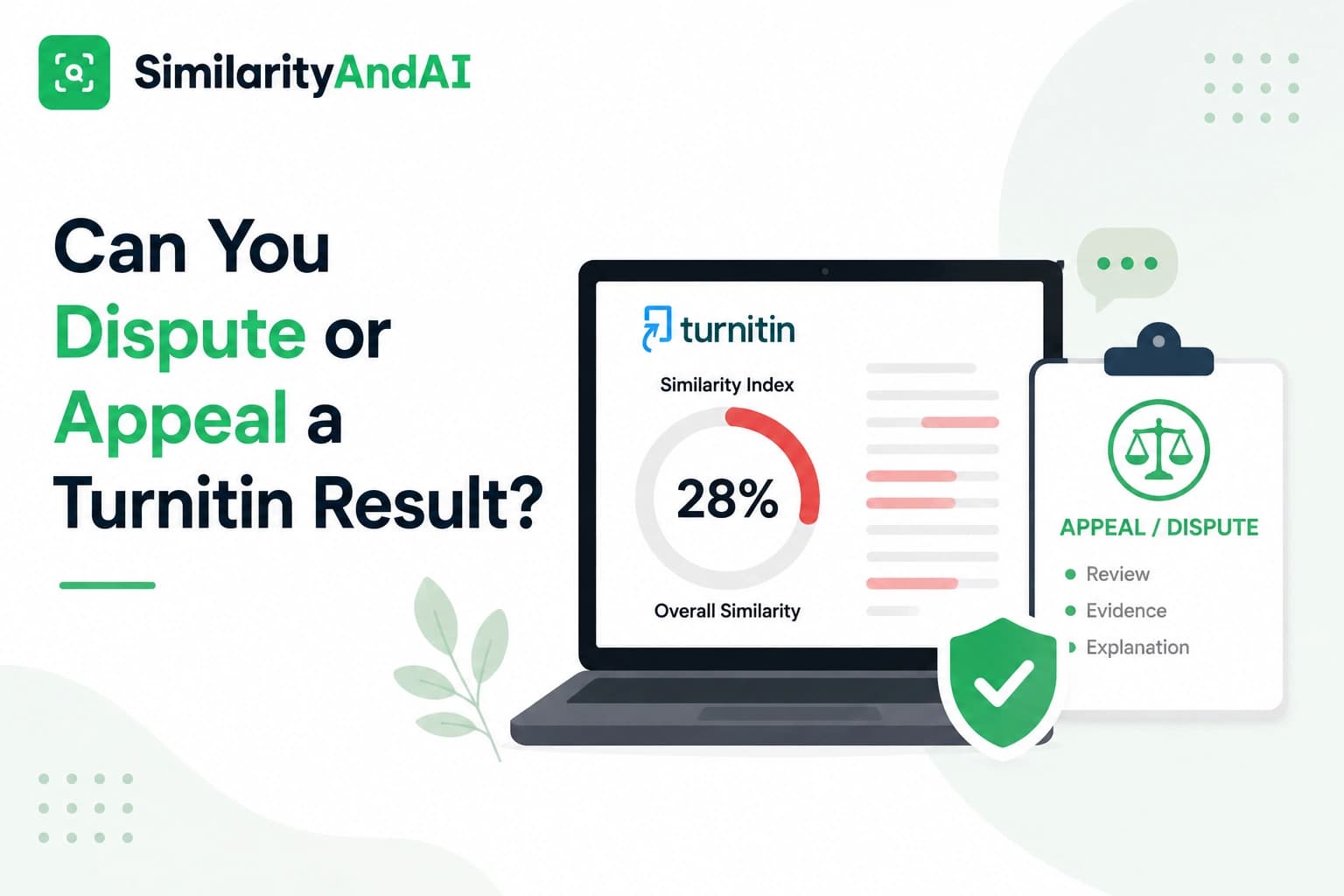
If the issue isn't resolved informally and moves to a formal allegation, the appeal process that follows is generally structured around a few consistent stages, though the names and specifics vary by institution: written notice of the decision and the grounds for it, a defined window to file a written appeal (often through an online form specific to your school's academic integrity or student conduct office), a review — sometimes a hearing — where you can present evidence and your account, and a final decision that itself may be appealable to a higher body or administrator.
Some institutions' policies specify that an appeal hearing isn't a full re-hearing of the case, but narrowly focused on whether specific appeal grounds — like new evidence or a procedural error — have been met. That's worth knowing going in: a generic "I didn't do it" often isn't sufficient at the appeal stage if it doesn't map onto your institution's specific accepted grounds for appeal.
Who has to prove what
This genuinely varies by institution, and it's worth checking rather than assuming. At some schools, the burden falls on the instructor or institution to demonstrate misconduct occurred, often to a "clear and convincing evidence" standard — meaningfully more than a bare suspicion, though less than a criminal court's "beyond reasonable doubt." At others, once an initial finding is made, the burden shifts to the student to establish grounds for appeal. Neither approach is universal, so find your specific institution's policy — usually published by the office handling academic integrity or student conduct — before assuming which standard applies to your case.
Evidence that actually holds up
Across institutions, a few categories of evidence consistently carry the most weight in these appeals:
- Version history. Google Docs' version history or Microsoft Word's track changes show a document being built incrementally over time — a fundamentally different shape from a paper pasted in all at once. This is generally treated as strong, hard-to-fake evidence of genuine authorship.
- Drafts, outlines, and notes. Messy intermediate drafts, research notes with page numbers, and outlines that don't match the final structure exactly all demonstrate a real writing process rather than a single-pass submission.
- Source material. If a flagged match is a properly cited quote or standard terminology, showing the actual source and how it was used directly addresses the specific concern, rather than arguing in the abstract.
- Context for common or technical language. In fields with standardized terminology or methodology descriptions, demonstrating that the flagged phrasing is field-standard — not copied from one specific source — can be persuasive context for an instructor reviewing the report.
What tends not to hold up well on its own is a general assertion of innocence without supporting material. The appeals process is fundamentally evidence-based, and the stronger the documentation of your actual process, the stronger your position.
Appealing an AI detection false positive specifically
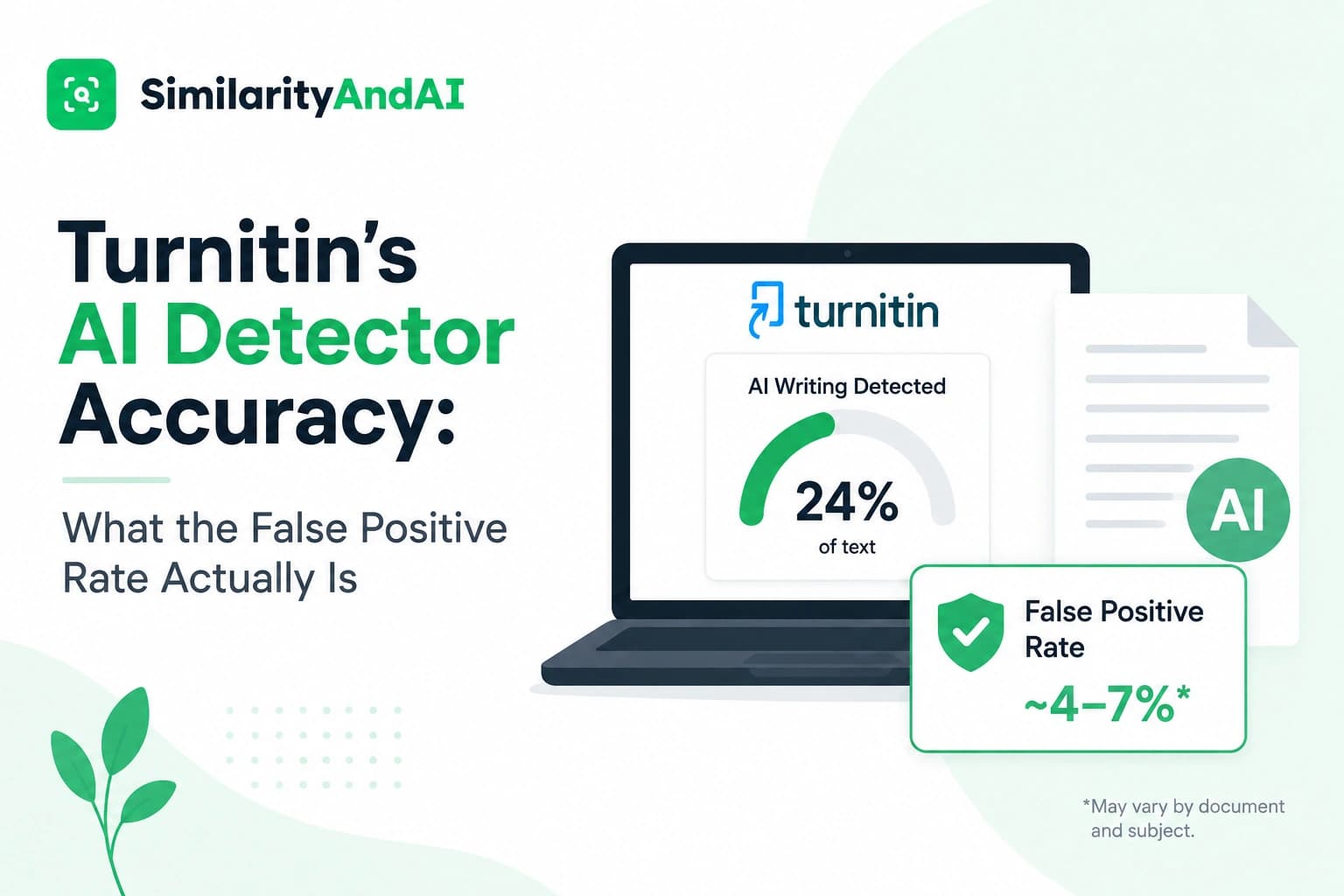
AI-flag appeals follow the same general shape but lean even more heavily on process evidence, since there's no cited source to point to the way there is with a similarity match. Turnitin's own guidance is directly useful here: Turnitin has publicly acknowledged that its AI detector can misidentify human-written text, and its stated position is that the AI score should never be the sole basis for a misconduct finding — a point covered in more depth in our piece on Turnitin's AI detector accuracy and false positive rate. That official position is itself useful in an appeal: if a decision rests entirely on an AI score with no other supporting evidence, that's a legitimate point to raise, citing Turnitin's own stated guidance on how the score should be used.
Version history is particularly persuasive here, since an AI-generated document typically appears in large blocks at once, while genuine human writing shows the kind of uneven, iterative editing pattern that's much harder to fake convincingly across an entire document.
Deadlines matter more than students expect
Appeal windows are often shorter than people assume — commonly somewhere between about five business days and two weeks from formal notification, though this varies meaningfully by institution and some allow longer. Missing the deadline can mean losing the right to appeal at all, regardless of how strong your underlying case is. The moment you receive any formal notice, the first thing to check — before drafting any response — is your institution's specific deadline and required format for filing.
Where appeals typically end
Outcomes genuinely vary, but a meaningful share of appeals — especially ones supported by clear process evidence like version history — end with the original finding reduced or dismissed entirely, particularly for first-time, ambiguous cases. Others result in a modified sanction rather than a full reversal. A minority proceed to a further appeal level if the student and institution still disagree after the first review. None of this is guaranteed in either direction, which is exactly why the strength of your evidence, not just the existence of an appeal right, tends to determine the outcome.
The bottom line
A Turnitin result is not a final judgment, and disputing an interpretation of one is a normal, structured part of how these systems are designed to work — not an exceptional or adversarial step. The process generally rewards documentation: version history, drafts, and a clear account of your actual writing process carry far more weight than argument alone. Know your institution's specific deadline the moment you're notified, and don't wait for a process to become formal before responding with evidence.
If you want to avoid an ambiguous flag in the first place, checking your real similarity and AI detection scores before you submit — covered in our piece on how to check your Turnitin score before submitting — lets you see and address anything questionable while you still control the outcome. You can check your reports through SimilarityAndAI, the same Turnitin engine your institution uses.
Frequently asked questions
Can I appeal a Turnitin score directly to Turnitin?
Not usually, and not in the way you might expect. Turnitin doesn't sell to individual students, and it doesn't adjudicate academic integrity cases — that's your institution's role. Turnitin does have a support channel institutions can use to report a suspected system error (a technical glitch, not a disagreement about interpretation), but the actual appeal — arguing that a match isn't misconduct — goes through your school's academic integrity process, not Turnitin directly.
What's the strongest evidence for a plagiarism or AI-detection appeal?
Version history from Google Docs or Word's track changes is generally considered the strongest single piece of evidence, since it shows a document being built incrementally over time rather than appearing all at once. Drafts, research notes, outlines, and anything demonstrating your actual writing process add to that. A blank assertion that "I wrote this myself" without supporting evidence is the weakest position to appeal from.
How long do I have to file an appeal?
It varies significantly by institution — anywhere from about five business days to two weeks from the date of formal notification is common, though some schools allow longer. There is no universal deadline, and missing it can forfeit your right to appeal entirely, so check your institution's specific academic integrity policy immediately after receiving notice rather than assuming you have time.
Who has to prove the case — me or the school?
This varies by institution. Some policies place the burden of proof on the instructor or the institution to demonstrate misconduct occurred; others place the burden on the student to show grounds for appeal once an initial finding has been made. Check your specific institution's policy, since assuming the wrong standard can lead to under-preparing your case.
Ready to check your paper?
Get your Turnitin reports in minutes.
Same reports your institution generates — delivered privately, fast.